

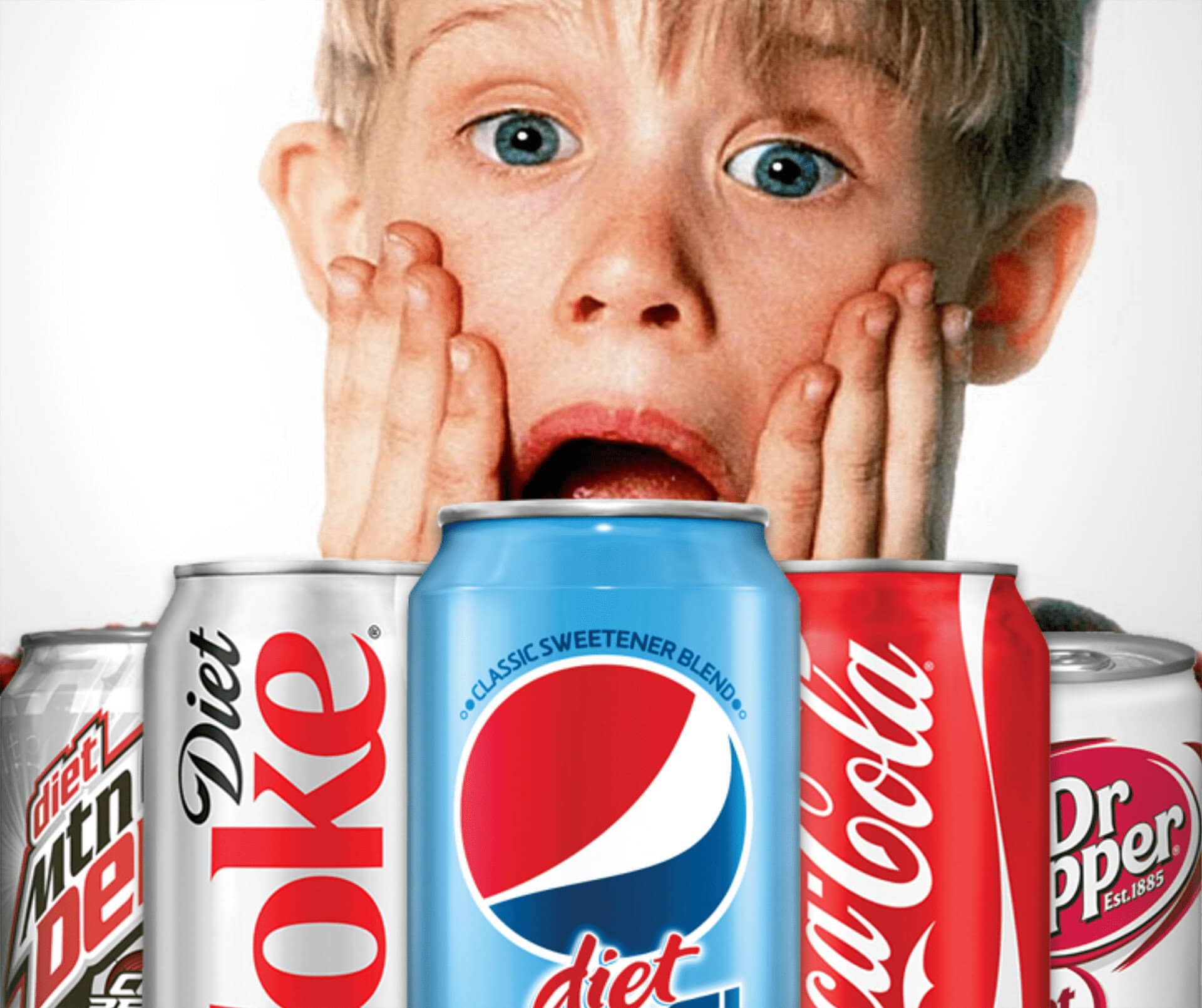
Has your child ever had a no sugar or zero calorie food or drink that was sweetened with an artificial sweetener? A lot of parents think they are doing the right thing by cutting down on sugar, but some studies suggest artificial sweeteners may be linked to changes in appetite, taste preferences, and the gut microbiome. These changes may possibly affect blood sugar levels and could be connected to metabolic syndrome, insulin resistance, diabetes, and weight gain.
Artificial sweeteners can be much sweeter than regular sugar. Some are 180 to 20,000 times sweeter than sugar. Because of this, they may possibly change a person’s taste buds and make them want sweeter foods and drinks over time. One study suggests that taste buds may be able to reset if a person goes a long time without consuming sugar or sweet foods.
What Are Nonnutritive or Artificial Sweeteners?
Nonnutritive sweeteners are ingredients used instead of sugar to sweeten foods, drinks, and other products. These can be found in things like oral care products, energy drinks, diet sodas, and some medications.
Artificial sweeteners usually have few or no calories or nutrients. Some may come from plants, herbs, or even sugar itself. They are much sweeter than sugar, so only small amounts are needed to make foods and drinks taste sweet. Some artificial sweeteners are not broken down much by the body and mostly pass through the digestive system unchanged.
The eight nonnutritive sweeteners approved by the U.S. Food and Drug Administration are:
- Aspartame such as Equal or NutraSweet
- Acesulfame potassium such as Sunett and Sweet One
- Neotame
- Saccharin such as Sweet ‘N Low, Sweet Twin, and Sugar Twin
- Sucralose such as Splenda and Equal Sucralose
- Stevia such as Truvia, Stevia in the Raw, SweetLeaf Sweet Drops, Sun Crystals, and PureVia
- Luo han guo or monk fruit extract
- Advantame
American Academy of Pediatrics’ Suggestion for Artificial Sweeteners
The American Academy of Pediatrics has suggested that the amount of low-calorie and no-calorie sweeteners should be listed on product labels. This would help families and researchers better understand how much children are consuming and what possible health effects may happen.
There is still a lot that is not known about how artificial sweeteners affect children’s health. More research is needed about their use and the possible connection to obesity and Type 2 diabetes in children. Since many children regularly consume products with artificial sweeteners, it is important to better understand how they may affect long-term health.
Because these products are much sweeter than sugar, parents should be aware that there could possibly be negative health effects if children consume too much of them. If you have concerns, talk with your child’s pediatrician at the next office visit.

The Best Ways To Prevent Spreading Or Catching Viruses
Here is a simple list of the best ways to prevent spreading or catching any virus including the Coronavirus! Stay home when you’re sick especially if you have a fever. Cover your mouth or nose with a tissue when you cough or sneeze. If you don’t have a tissue, cough...
The Importance of Routine Well-Child Visits with Your Child’s Pediatrician
Making a lot of trips to your child’s pediatrician for their appointments can be tiring as a busy parent, but regardless of the reasons—runny nose, a slight fever, an infection, or something else that is concerning to you—it is a good idea for your kid to make regular visits to their pediatrician’s office.